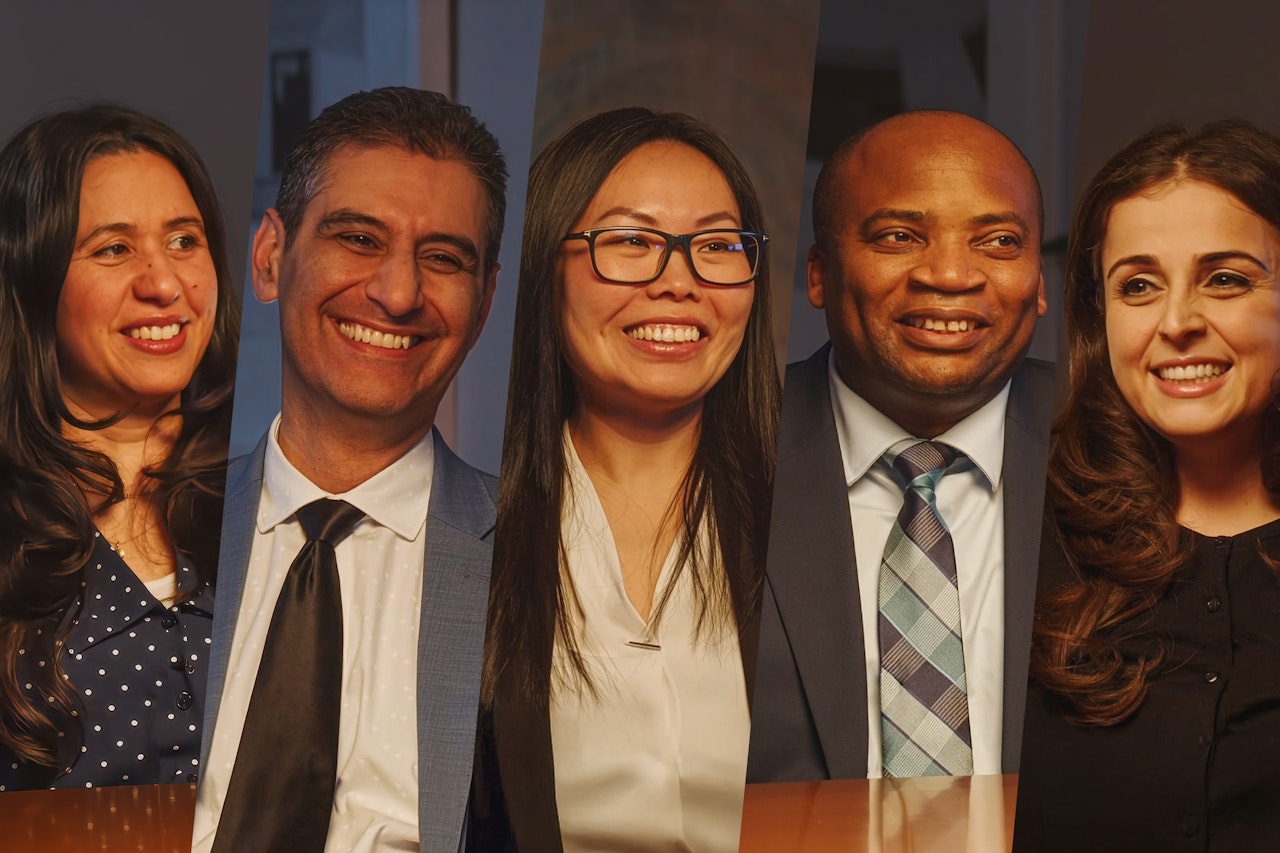
BAHÁ’Í WORLD CENTRE — In the latest podcast episode of “In Conversation,” guests from Canada describe how growing numbers of young people are placing service at the center of their lives, finding in it a sense of purpose that permeates all aspects of their lives, including education, family, and career.
“When you look at the situation of the world,” reflects Golbon Singh, a member of the Auxiliary Board in Canada, “sometimes we can become hopeless. But youth are deliberately choosing to see hope and to align themselves with the forces of integration instead of the forces of disintegration.”
This orientation toward hope is expressed in the way youth are rethinking the direction of their lives. Mrs. Singh explains that as young people participate in Bahá’í moral and spiritual education programs, they begin to see the process of forging community as requiring “a long-term perspective” where they “think about, over time, how change can happen” through a process of action, reflection, and consultation.
“In one place, the youth were analyzing their community and one of the challenges they saw in their schools was violence,” notes Mrs. Singh. Through perseverance and noble intention, the youth organized neighborhood forums where together with their peers, young people could reflect on contributing to peace and becoming “promoters of peace in their community.”
As youth become more conscious of the community, relationships among generations also begin to shift. Betty Dai, another member of the Auxiliary Board in Canada, shares that a group of youth noticed a growing gap between the younger generation and the elderly, observing how “oftentimes the seniors are used to giving, not receiving.” Reflecting on the sacrifices of older generations that often go unnoticed, the youth organized a breakfast to honor their seniors, strengthening intergenerational bonds.
In another community in Canada, youth began thinking about how they could accompany the younger generation in their studies. Through consultation and reflection, they organized short monthly math and science camps in hopes of fostering a love for learning among the younger youth.
Over time and through sustained effort, participants in these educational camps began collectively developing “a thirst for understanding” and an appreciation that “there is this loving friend or mentor that is trying to accompany” them on a path of learning, notes Neda Farahmandpour, a member of the Auxiliary Board in Canada.
“What is amazing to see,” says Ayafor Ayafor, a member of the Board of Counsellors in the Americas, “is that you have young people who are reading the reality of their neighborhoods, are looking at what action needs to be taken, are taking some approaches, are learning and reflecting constantly about it, and then are trying things.”
This growing capacity of youth to read and respond to their reality is also finding expression in civic settings. Borna Noureddin, a member of the Board of Counsellors in the Americas, shares how one city sought out the perspective of its youth on an urban planning design. Dr. Noureddin notes how the youth, having deep familiarity with the reality of their neighborhood, recognized that “the plan was dividing people. It was reinforcing the things that keep people separate.”
As the young people reflected, Dr. Noureddin explains, they concluded that they “want a neighborhood that brings people together,” one that reinforces harmonious patterns of interaction.
The podcast episode is part of the “In Conversation” series, a collective exploration by several individuals of the practical application of Bahá’í principles to the building of peaceful societies.